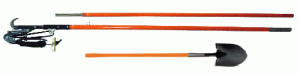
- Long-handled tools usually offer greater leverage and reach, and often allow working from a standing position. The handle may be either straight or have a D-shaped hand grip on the end. With some tools, such as long-handled pruners, handle extensions may be available.
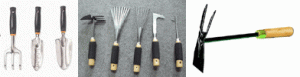
- Short-handled tools are lighter in weight, usually less expensive, more compact to store than the long-handled varieties and allow one to work efficiently in confined spaces or while kneeling. Common short-handled tools include hand pruners and clippers, hoes, garden trowels, and cultivators.
- Handles are commonly constructed of wood (requires some additional maintenance to keep splinter-free), fiberglass or plastic (check for cracks), and sometimes metal (check for corrosion and cracks).
- If a handle or any other part of the tool is damaged or loose, it should be repaired or replaced immediately. Pay particular attention to where the handle fits into the tool for looseness or damage.
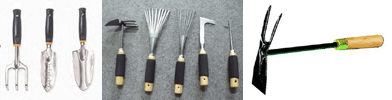
In no particular order, some of the more common hand gardening tools are listed in this section (the same tool may have several different common names). This is only a basic list, for there are many styles and variations of these and other tools available to the home gardener.
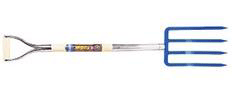
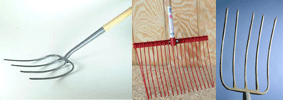
- Spading Fork. These have heavy, flat tines and often a D-shaped handle. They are used to open up the ground, dig bulbs, incorporate soil amendments, and turn compost.
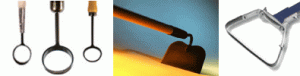
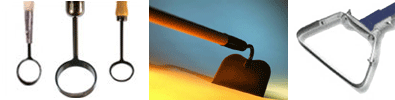
- Hoe. A hoe is used for weeding and scraping the surface of the soil. Garden hoes include the traditional flat scraping/chopping types, along with the newer loop, scuffle, or stirrup styles.
- Pitchfork/Manure Fork. Pitchforks and manure forks have long, thin tines, which are not as heavy as those on a spading fork. They are used for picking up and moving loose materials.
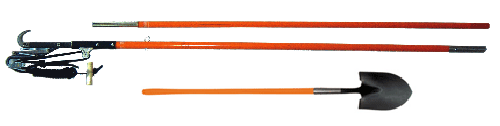
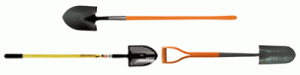
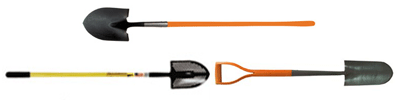
- Round-nosed Shovel. Round-nosed shovels are used for heavy digging and mixing, such as when incorporating soil amendments or preparing planting holes.
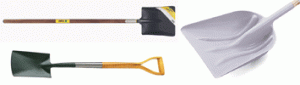
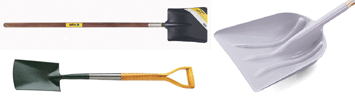
- Square-nosed Shovel. The flat blade allows it to be used to scoop up materials, level high spots in the soil, and cut straight lines through sod and soil.
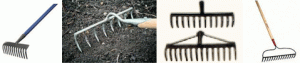
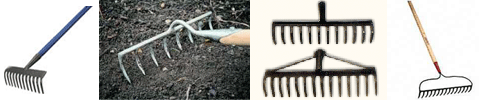
- Bow or Garden Rake. This is a heavy rake with short, stiff tines supported by a flat or bow-shaped metal frame. It is used for raking heavy materials, removing rocks and other debris from the soil, and smoothing the soil in preparation for planting.
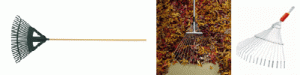
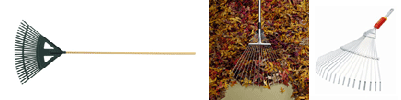
- Leaf Rake. The leaf rake has long, thin, flexible tines designed to gather leaves or other light materials.
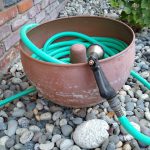
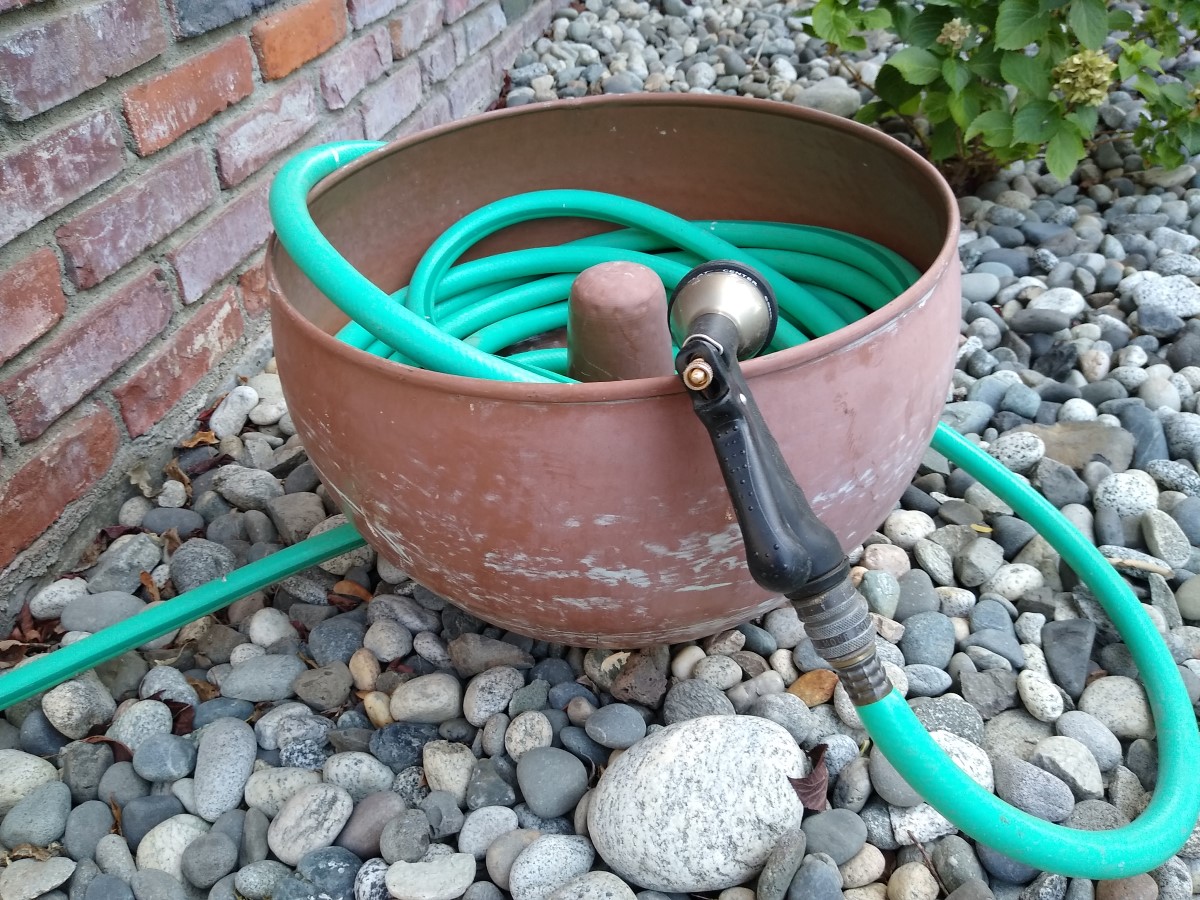
- Garden Hose. A garden hose is used to provide supplemental water to your plants, clean items, and sometimes to assist in applying fertilizers or pesticides. Check out “Garden Hoses” for more information.
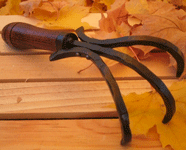
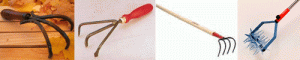
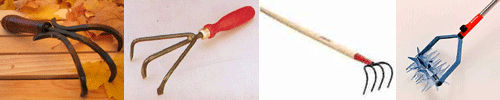
- Cultivator. A cultivator is a tool with heavy curved or bent tines, or sometimes multiple spinning blades, designed to open up and aerate the soil. The cultivator styles with tines are also used to mix materials and to effectively loosen weed roots.
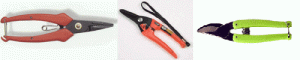
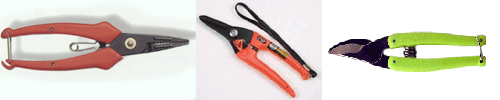
- Hand Pruner. Hand pruners are used for removing flowers, light-weight foliage, and small branches. They may have either anvil or bypass blades.
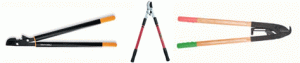
- Long-handled Pruner/Lopper. These are long-handled versions of hand pruners, and provide greater reach and leverage, allowing for larger items to be cut. They may have either anvil or bypass blades, and some of the heavy-duty versions have ratchet mechanisms for additional power.
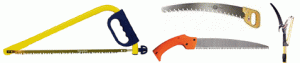
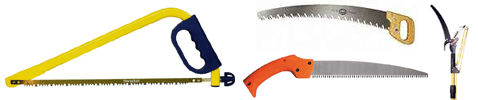
- Pruning Saw. These are hand saws designed for efficient garden pruning. They may be either a single blade with a handle or utilize a metal or wood frame. Pruning saws may also be mounted on long handles which allows higher branches to be cut from the ground (these styles often have a rope-controlled lopper in addition to the saw).
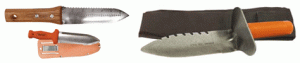
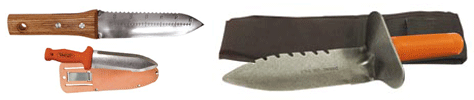
- Garden Knife. A garden knife is useful for cutting twine and plant ties, opening bags, plant propagation, opening up plant root balls, and general garden use. The safest styles have a sturdy fixed blade (often with serrations) which will not collapse on your fingers during use.
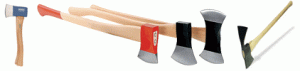
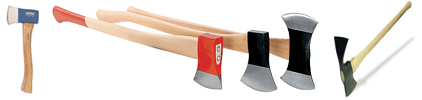
- Axe/Hatchet. Axes and hatchets are used to do rough chopping. Some axes have a double blade, others a flat end on the head that is used to carefully drive wooden stakes (not metal, which might make the tempered axe head chip). Some have a flat, transverse grubbing blade on the head for the removal of roots (these are called a Pulaski, garden or grubbing axe). Hatchets are smaller, short-handled versions of axes.
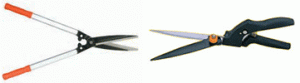
- Clipper/Shears. These are used to remove a layer of vegetation from the surface of a planting, hedge, or turf grass. Grass clippers trim turf grass, and hedge shears are used to shape hedges and shrubs.
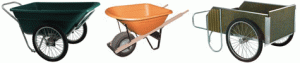
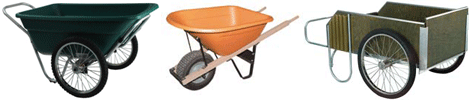
- Wheelbarrow/Garden Cart. These are not only used to move heavy and/or bulky materials such as soil, garden debris, compost, and plants, but also as portable mixing containers for materials such as soil amendments and even concrete.
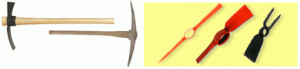
- Mattock/Pickaxe. The mattock is a heavy, flat-bladed tool designed to dig or grub in the soil. The pickaxe, with its sharp points, is used to break up heavy or rocky soils. Often a combination tool is found, which has a mattock on one end of the tool head, and a pickaxe on the other end.
When using power tools, remember the following:
- Read and follow all use and safety instructions.
- Keep power tools in good working condition.
- Hot surfaces, spinning blades, excessive noise, and thrown material may cause serious injury to the operator and those nearby.
- Use eye and ear protection.
- Keep children, other persons, and pets away from these tools when in use.
- With electric tools, be careful not to damage the cord or get things wet.
- Always use and store gasoline and other liquid fuels in a safe location and manner.
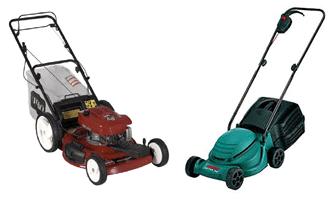
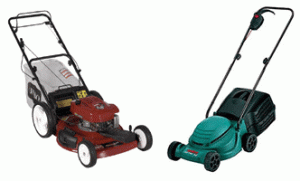
- Lawn Mower. These are used to cut turf grass. Walk-behind mowers may be powered by gasoline or electricity; some power mowers may be either self-propelled or riding mowers. Power mowers often can be configured to mulch or “grasscycle” clippings (returning the clippings to the lawn). Large wheel, heavy-duty versions are available for cutting weeds.
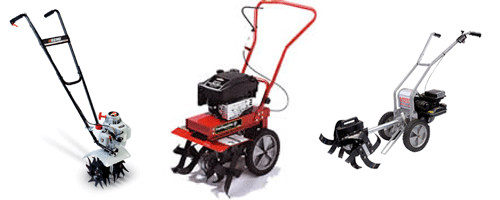
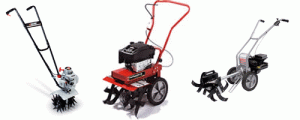
- Tiller/Cultivator. These are used to break up large areas of compacted soil and to quickly incorporate soil amendments. They may also be used to loosen the soil prior to grading.
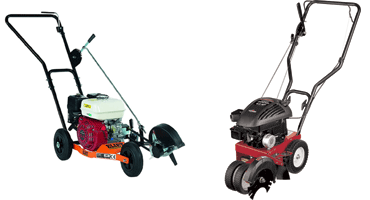
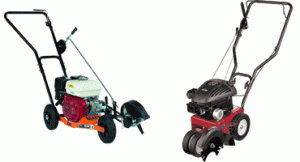
- Lawn Edger. These are used to trim the edge of a lawn or bed.
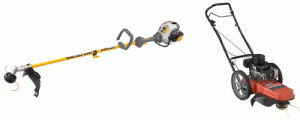
- String Trimmer. These devices use a heavy string (usually plastic) on a revolving head to trim grass and light plant material.
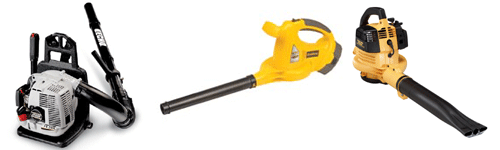
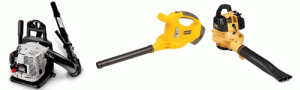
- Leaf Blower. Gasoline or electric, these devices use forced air to push light material.
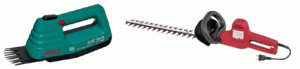
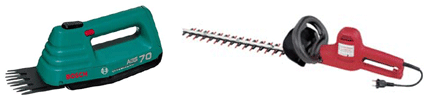
- Electric Clipper/Trimmer/Shears. These are often used to trim turf grass, hedges, and shrubs. They may use a cord or battery.