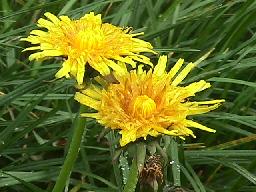
What is a weed?
… simply a plant that is growing where it is not wanted. This does not mean that the plant is a weed in all situations. Some weeds were originally introduced as ornamentals, which have now become established in an area. Many plants that we may consider weeds are also beneficial. Certain species can be important sources of pollen and nectar for pollinating insects (including honeybees), while others may provide food or shelter to various species of insect predators, parasitoids, and other beneficial species. Conversely, some weeds may also serve as hosts of diseases and pests which affect desired plants, potentially increasing the number or severity of problems in our yards and gardens.
Certain weeds may be, for various reasons, designated as “noxious”, and special management efforts may be required. For more information on noxious weeds in your area, and what you should do to manage them on your property, contact your county’s Noxious Weed Control Board.
An Integrated Approach to Weed Management
An integrated approach to weed management uses a combination of cultural,physical, biological, and chemical methods to provide the best possible weed management in each situation. Integrated weed management is more environmentally sound and more effective than complete reliance on chemical management (i.e., herbicides). While not all management methods are useful for all weed species, taking an integrated approach to weed management can greatly increase the effectiveness of your efforts while reducing the expense associated with herbicide use.
The first step of any weed management program is to IDENTIFY THE WEED SPECIES. With a positive identification of the plant in question, and a little knowledge about that species, you can identify weaknesses that will help you manage the weed quickly and effectively. Knowing the common and scientific names of the plant species will let you answer key questions such as (1) does the plant have an annual, biennial, or perennial life cycle, (2) does the plant spread aggressively, (3) which management methods are best suited to this species, and (4) which herbicides will manage it safely and effectively?
Hortsense is not designed to be a complete reference for weed identification. It is intended solely to make management recommendations for weeds that have been identified. Many references are available to help with weed identification. If you have a weed species you cannot identify, you may contact your local WSU Master Gardeners or Cooperative Extension Office for assistance.
Regardless of the number and species of weeds in our yards, it is not realistic to attempt to eradicate all weeds, and the goal of weed management (except in the case of certain noxious weed species) should not be 100% control. Rather, the goal is to reduce the number of weeds to an acceptable level. This level may be the number of weeds that begin to interfere with yields in the vegetable garden, or the number of weeds we can aesthetically tolerate in the flower beds. Setting this “threshold” level is a decision which must be made by the gardener.
The following weed management methods are discussed in general terms: Weed Prevention, Mechanical Weed Management, Cultural Weed Management, Biological Weed Management, and Chemical Weed Management. In all cases, preventing seed production is an important part of the management process.
Weed management is much simpler if weeds do not become established in the landscape. Exclusion of weed species is by far the best preventative measure available to the home gardener. Since weeds can be introduced in topsoil, compost, with other plants, in irrigation water, and via seed-contaminated clothing, equipment, and pet hair, a little attention can prevent a lot of trouble. Do not introduce soil contaminated with weed seeds or plant parts, and don’t plant ornamental species which are potentially weedy (i.e., Japanese knotweed, Scotch broom, and other aggressive perennials) unless you are willing and able to control them.
Several methods of physical weed management exist. Among these are hand weeding, hoeing, cultivating, and mulching. These methods have advantages and disadvantages that vary with the type of weeds to be managed, making awareness of the weed’s life cycle and growth habits essential for effective management. Physical management methods must be used very regularly to have any appreciable effect on spreading or perennial weeds. The root system of perennial plants must be starved by frequent pulling, hoeing, or cultivation for these methods to be effective.
Most annual and biennial weed plants can be easily managed by hand weeding. For these types of weeds, hand weeding can be an ideal method of management since the soil is not disturbed, new weed seeds are not brought to the surface, and the seeds will not be encouraged to germinate. Infrequent hand weeding is seldom effective on spreading or perennial weeds, however, since it is very difficult to remove all parts of the plants.
Hoeing is intended to cut weeds off at or just below the soil line with minimal soil disturbance. Hoeing can give good management of annual broadleaf weeds and biennial plants in their first growing season. Grasses may be more difficult to manage by hoeing, as the growing point is frequently below the soil line and may not be affected by the shallow cuts used in proper hoeing. As with hand weeding, hoeing may not be effective on spreading or perennial weeds unless it is performed frequently enough to starve the roots.
Cultivation (rototilling and similar methods), while effective for annual and biennial weeds, can actually contribute to the spread of perennial weeds. For instance, cultivating wild morning glory will result in a garden full of the weeds by cutting the roots and shoots into small sections that can grow many new plants.
In waste areas (uncultivated sites such as along roadsides), mowing may provide adequate management of tall-growing weeds simply by reducing seed production. It will also help reduce the fire hazard posed by dried weeds. Few weed species are killed by mowing, but mowing to prevent seed production may be a very effective means of management of certain species, including biennials and some annuals. In lawns, mowing regularly at the proper height for the grass species may help minimize weed growth and invasion, but will seldom provide adequate weed management. Many lawn weed species will, when mowed, simply continue to produce flowers and seeds at the reduced height.
Mulching relies on preventing weed growth rather than directly attacking the growing weeds. Mulches work by preventing sunlight from reaching the plants underneath the mulching material. Without sunlight, the plants cannot grow, and seeds (of some species) are not encouraged to germinate. In addition to weed management, mulches can aid in conserving water and preventing erosion. Several mulching options exist for the home landscape, where they can be very effective in gardens and ornamental plantings.
Organic mulches, such as bark, compost, grass clippings, straw, and other materials, typically need to be applied in a layer from two to several inches thick to be effective, and must be renewed periodically because of natural decay. Organic mulches used alone will probably be only partially effective against many perennial weeds which have sufficient food reserves to grow through the mulch.
Inorganic mulches include plastic, commercial “weed barrier” fabrics, and other materials such as roofing paper. Gravel and volcanic rock can also be considered inorganic mulches, since they do not degrade over time. Most plastic or fabric inorganic mulches will need to be covered, either with soil or with a thin layer of organic mulch or gravel, rock, or similar material. This additional layer will help prevent breakdown of the barrier layer by sunlight and weather, and can be more aesthetically pleasing than a sheet of black plastic. Planting holes must be made in plastic or fabric layers if you wish to plant in the mulched areas. It is important to keep in mind that water and air movement into and out of the soil will be hampered by use of plastic or fabric mulches. Special care must be taken when irrigating in areas mulched with these materials.
Cultural weed management methods can be effective in reducing the number of weeds in a landscape and also reducing the likelihood of new weed invasions. In the home landscape, cultural weed management methods may include use of drip irrigation systems to minimize water availability to weeds, selective fertilizer applications (rather than broadcast) in plantings, and maintaining healthy plantings to provide competition for weed species. In vegetable gardens, competition can be provided by timing plantings carefully and interplanting slow-growing vegetables with fast-growing types to minimize the open areas where weeds thrive. In lawns, a dense, healthy stand of grass can help prevent weeds from becoming established. In ornamental plantings, useful cultural techniques include maintenance of healthy plants to shade out weed seedlings and use of drip irrigation to minimize water availability.
Biological weed management (biocontrol) relies on the action of one or more natural enemies of a weed species. These enemies may include diseases, insects, or other organisms. Biological methods will help manage weeds, but do not eradicate them. In Washington, biocontrol has had some success in managing tansy ragwort (cinnabar moth larvae), St. Johns wort (leaf-feeding beetles and a seed midge), and some other species. Biocontrol probably has little applicability in the home landscape primarily because of the relatively small numbers of weeds involved. In larger areas such as pastures, roadsides, waste areas, and woodlands, biocontrol is more viable and may significantly contribute to the management of some weed species.
In an integrated weed management program, herbicides are typically considered to be the least-preferred management option. Reasons for this include expense and the potential for these chemicals to be used contrary to the label directions. Herbicides are designed as chemical weed management tools but, as with many other kinds of tools, the user must become proficient in their proper use or suffer the consequences. Some simple precautions will help you minimize the risk of chemical use, while maximizing the effectiveness of herbicides as part of your integrated management strategy.
Since not all products are effective on all weed species, it is important to identify the weed species to be managed and to check the herbicide labels to determine which product(s) will be effective.
Because of the variety of plants and planting situations in the home landscape, it is impossible to find one herbicide that is suitable to manage all weeds in all situations. It is very important to ALWAYS READ THE LABEL before you buy a product in order to find an appropriate product for your situation. When selecting a product, check the label to be certain that the site (i.e., vegetable garden, lawn) where you want to use the herbicide is listed and that the product will be effective on the weed in question. The label will also give usage rates and precautions for your safety and to protect desirable plants.
There are two main types of herbicides: contact herbicides, which only kill tissues that are directly contacted by the spray, and translocated herbicides, which are taken up by the plants and moved throughout the plant tissues. Contact herbicides can provide adequate control of annual and biennial plants, but will only give “top-kill” of perennials and other weeds that can resprout from the roots. Translocated herbicides, when used correctly, are typically the better choice for controlling perennial weeds.
To get the best results from an herbicide application, it is important to time it properly in relation to the weed’s life cycle. This requires some familiarity with the weed and its life cycle. All weeds are most easily managed when they are seedlings. It is essential to manage annual weeds before they produce flowers and seed. Biennial weeds are most easily managed in the first season, when they are seedlings or small rosettes and have not produced flowers or seeds. Timing of chemical management of perennial weeds often depends on the species. The best time to manage perennial weeds is when they are seedlings, but chemical applications just prior to blooming, during early stages of flowering, and during the fall regrowth period (when sugars are being translocated to the root system for winter storage) can also be effective. In all cases, read and follow label instructions in order to get the best, and safest, results.
Herbicides will damage or kill ornamentals just as easily as they damage or kill weeds. Damage can result from direct contact as well as from physical drift of spray, runoff of treated soil, and vapor drift (drift of fumes of the herbicide). Always use caution when applying herbicides around desired plants. Do not spray in windy conditions. In some cases, it may be necessary to screen desirable plants with plastic to protect them from the herbicide. To minimize risk to desired plants, use a separate sprayer for applying herbicides. Do not use the same equipment that you will use for application of insecticides, fungicides, or fertilizers, as traces of herbicide can remain and cause damage to desirable plants. If the herbicide label directs you to apply a specific amount of the product per unit area (e.g. 5 oz./100 square feet), calibrate your sprayer or spreader to make sure you are using the right amount of herbicide. Too little herbicide will be ineffective and may contribute to a weed developing resistance to an herbicide, while too much herbicide will waste money and could cause damage to surrounding vegetation.
For more information on proper pesticide application techniques, sprayer calibration, pesticide safety and disposal, and related topics including weed identification, you may wish to consult some of the publications available through Cooperative Extension. A free catalog of publications may be requested from your local Cooperative Extension office or from the Bulletins Office, Cooperative Extension, Cooper Publications Building, Washington State University, Pullman, WA 99164-5912.
The following article on managing weeds after a flood was written by Nancy Ness, Grays Harbor County Noxious Weed Control. Grays Harbor and Pacific Counties (indeed, much of Western Washington) experienced extensive flooding in the winter of 2007-2008. This article was originally published in the Grays Harbor County Extension Quarterly Newsletter, March-May, 2008.
Pastures after a flood need some special TLC. First and foremost – remove any debris, especially along fencelines and in corners. Livestock could be injured by barbed wire or sharp metal, glass and garbage. Remove any fallen wild cherry, laurel, plum or peach limbs from pastures to prevent poisoning. Also, do not feed livestock any silage that has been flooded. Horses, sheep, poultry, swine and cattle are affected most severely (in that order) from damaged feed. Lack of adequate forage could force livestock to eat poisonous plants that they would otherwise avoid.
This winter’s flooding has had an effect on weeds we’ll be seeing this spring and summer. Many weed seeds float and move great distances in floodwaters. Existing ground cover, whether it is lawn, pasture grass or native perennials, damaged by flooding will be less able to compete with weed invasions. Healthy pastures can compete with these new weeds.
Pastures and lawns that have been submerged for less than 7 to 10 days and are covered with less than 3 inches of silt have a good chance of complete recovery. Lower temperatures and the stage of growth during winter are also good indicators of a speedy recovery. Perennial ryegrass and tall fescue are both excellent grass species for flood survival. To speed the process of recovery: break up any silt crust as soon as possible with a rake, harrow, or mechanical aerator; test the soil for nutrients (like lime, phosphorus and potassium) apply nitrogen fertilizer or manure (after danger of further flooding has passed) and overseed thin areas with a desirable permanent seed mixture.
Pesticide storage in flood prone areas is a major concern. If you suspect pesticide contamination due to flooded outbuildings – even garden sheds, let caution guide your every move. Before entering an area suspected of a spill, wear protective gear, especially safety boots. Any pesticide spills should be reported to the Department of Ecology, Southwest Regional office: 360-407-6300 in Olympia for advice on what to do, to prevent groundwater contamination, including your well. Pesticides should be stored in a safe location, not likely to flood and far from well heads and play areas. Don’t store large quantities of pesticides; purchase only enough for a single season to avoid disaster. That being said, contamination to dormant crops like grasses during the 2007 flood event should not be a huge concern unless there is a possible source directly upstream, i.e. wastewater treatment, truck stop, etc. Soils are able to bind and degrade most contaminants, and flood waters certainly dilute any concentrations. Soil sampling for those specific contaminants would be useful for those directly downstream from a potential source.
During the next growing season, new weed species may appear where floodwaters deposited seeds. Extra monitoring for weed invasions during the growing season will literally nip those unwanted plants in the bud. If in doubt as to the identity of new plants appearing on your flood damaged property, contact your county noxious weed control office, in Grays Harbor, call 360-482-2265, or check our website: graysharbor.wsu.edu. In Pacific County call: (360) 875-9425, in Thurston County call 360-786-5576, in Lewis County call 360-740-1215, in Mason County call 360-427-9670 ext. 592.
- Hortsense. WSU Extension.
Provides home gardener fact sheets for managing plant problems with IPM, along with information on cultural controls and Washington-registered pesticides. An excellent place to start when dealing with garden problems. - Grays Harbor County Noxious Weed Control Board.
Provides information on local noxious weed activities, local weed control programs, and links to other sites. - Pacific County Noxious Weed Control.
Provides information on local noxious weeds. - Washington State Noxious Weed Control Board (WSNWCB).
Information on weed control laws, noxious weed lists, educational materials, and relevant links. - PNW Weed Management Handbook.
Oregon State University. A quick and ready reference of weed control practices used in various cropping systems or site/situations. Includes a weed photo ID section to aid in identification.