In January
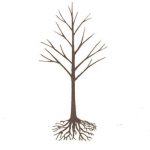 Bare root stock, berries, fruit and shade trees, grapes, ornamental shrubs and roses and perennial vegetables like asparagus, horseradish and rhubarb can be planted when the soil is workable. If you can’t plant right away, keep the roots from drying out by heeling in plants; place them on their sides in a shallow trench and cover with moist sawdust or soil.
- Hardy perennials such as columbine, delphinium, hellebore, veronica, and violas can be started from seed in green houses or cold frames. Set plants outside when they develop one or two true sets of leaves, but not more than a month before the last frost.
- Prune fruit trees on a day when temperatures are well above freezing. Use sharp bladed tools to make clean cuts. Spray dormant oils on over wintering insects.
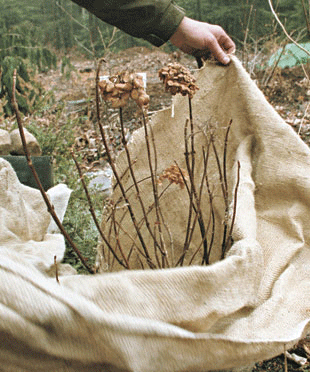
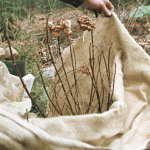 We often have cold dry weather in January along with drying winds. Plants need water in winter as well as in summer. Remember to water, the colder the weather, the more moisture is sucked out of the air and the ground. Protect more tender shrubs with some type of wrapping during cold snaps. Using some stakes and a sheet or other type of cover can keep the plant from suffering from the drying winds and cold temperatures. Remember to remove the covers as soon as the weather warms and don’t use plastic unless you plan to remove it during the sunny days.
- Start your campaign against slugs now. Whenever it’s warm slugs wake up and start nibbling. Use slug bait that contain iron phosphate and are safe for birds, pets, and children. Place near rocks, large pots, pavers, along house foundations and in dense ground covers as well as the edge of the lawn.
In February
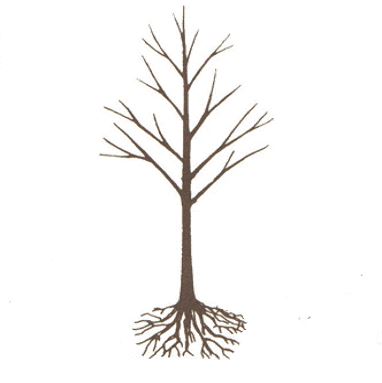
- Shop nurseries for winter blooming shrubs and trees. Daphne odo
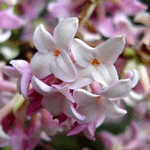 ra will be in bloom this month. One planted beside an entrance is especially nice because of their sweet scent. Witch hazel is another fragrant winter bloomer. Be sure to check the area you want to fill for size and choose a plant that will fit at maturity. There is nothing worse that choosing a plant that will outgrow your space.
 - You can plant peas outside this month. Give them a head start by soaking them in water overnight, then place them between layers of damp paper towels on a cookie sheet and set in a warm place. Use a spray bottle of water to keep the towels damp. Once the peas have sprouted, plant them.
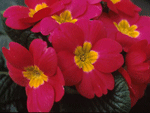 Blooming pots of primroses will be available everywhere now. You can plant them outdoors in beds or in pots. I replace my flowering kale planted in October with primroses. Grow them indoors repotted or with their plastic pots grouped in a handsome container and topped with moss. Keep them evenly moist to prolong their bloom. Transfer them to the garden when you see the leaves begin to show signs of yellowing. They will be very happy outdoors.
- Weed the garden. The weeds you pull now will never get the chance to steal valuable nutrients from your plants.
- Keep up the war on slugs.
In March
- Mow and till in your winter cover crop on the vegetable garden. You can also spray the cover crop with a topical spray containing glyphosate. Till the dead growth into the garden. Wait at least seven days before planting. Read the label; it is your responsibility to follow instructions on chemical sprays to the letter. Federal law requires this information to be available to the public.
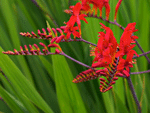 Plant summer flowering bulbs like gladiolas, crocosmia, and ranunculus.
- Prune roses. Early March is the best time to remove injured or dead canes. Cut the remaining ones back to six to eight inches long, then prune plants so they can form a vase shape. Each cut should have one strong outward facing bud. Use your best judgment as to how short to cut your Hybrid Tea Roses. Many experts suggest cutting them back to a foot above the soil.
- Continue the war on slugs. The tiny baby slugs that live along the edge of the lawn and in the groundcovers are the most voracious. Pine straw around hosta and other delicious plants is a great deterrent to the slimy little creatures.
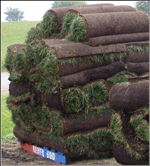 Throughout the Northwest, now is the ideal time to start a new lawn. First, spade and rake the top sod six to twelve inches of soil to a fine consistency and amend it with organic matter. Next, lay sod or rake in a seed mix of perennial rye mixed for our area.
- Sow cool season crops such as beets, carrots, chard, lettuce, peas, radishes, and spinach and most members of the cabbage family.
- Start warm season crops. Start seeds for tomatoes, peppers and other heat loving crops indoors on windowsills or in green houses. When the weather warms, transplant seedlings outdoors.
- Clean beds and follow up on your fall cleanup efforts by going over the beds again this month. Rake up and dispose of wind downed debris. Cut back perennials you may have left for winter interest or food for the birds. Pull weeds that have sprouted. Give beds a top dressing of fresh compost or soil. Clean slime or moss off paved areas with a 30% mixture of bleach and water using a brush, then using pressure washer or the hose on a strong setting.
- Dig and divide summer and fall blooming perennials early this month. Divide spring blooming plants in the fall or you may miss a season of bloom.
- Feed the lawn using a mix of 20 – 0 – 0 or a mix with a ratio of 3 – 1 – 2 of nitrogen, phosphorous, and potassium. This gives the lawn a heavy shot of nitrogen, which will assist in the hiding of Red Thread etc. Water it in thoroughly.
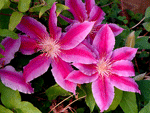 Cut back summer flowering clematis now. After pruning, scatter a handful of fertilizer at the base of the plant. 10 – 10 – 10 is a good choice. Prune back spring flowering plants in the fall or as soon as they finish blooming. This is a choice you have to make because you may want the vine to continue in the garden until fall. Some of the best clematis for the perennial garden are those that bloom either all season or twice during the season. They should be pruned sparingly in the spring or if need be, they can be cut clear back in the fall. This will delay the bloom of some but will not hurt the plant.
- Don’t forget those pesky slugs!
In April
- Get going pronto if you want to plant bare root fruits, roses and ornamental trees. Keep the roots moist until you place them in the ground. Our springs are usually moist enough for them but in the case of dry weeks, be sure to water them. Just make sure the soil isn’t saturated between rains.
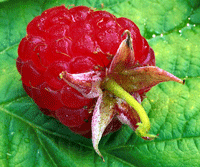
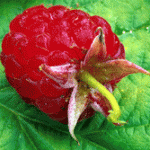 Plant blackberries, raspberries, and strawberries.
- If you haven’t mowed and tilled in the veggie beds cover crop, do it now. Don’t let it go to seed.
- Look for bedding plants but keep in mind that we can have a hard frost clear into June when putting them out. Frost tolerant plants like lobelia and Dusty Miller can be set out now and seedlings of snapdragons and petunias may be hardy enough to handle anything but a deep freeze. Basically, it’s a good rule of thumb to wait until Mother’s Day to set out most annuals unless they are in a protected area.
- Dahlia tubers if dug in the fall should now be replaced into the soil. If the ground is wet or there is a lot of rain, this can wait until things dry out. Be sure to place them in a well-drained area that gets at least eight hours of sun.
- Deciduous and evergreen trees can be planted throughout the Northwest this month.
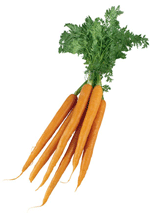 Cabbage, carrots, lettuce, parsnips, peas, potatoes, radishes, spinach, and Swiss chard can be planted now.
- Amend the soil once the ground has thawed and is dry. Dig organic matter into beds. Leaf mold, compost and well-rotted manure are all good amendments.
- As you accumulate garden debris, speed up the decomposition by mixing new material with old compost and high nitrogen fertilizer. Turn the compost pile regularly and keep it damp but not soggy.
- Groom rhododendrons and evergreen azaleas. As flower trusses fade, snap them off. Most will come off with a tweak of the thumb and fore finger. Just below the flower heads, new growth buds emerge. Be careful not to break them off. The best time to prune rhodies is right after bloom. This is also a good time to feed them with a fertilizer high in acid. Some rhodies begin setting flowers as early as July; pruning in the fall will destroy the flowers for the following spring.
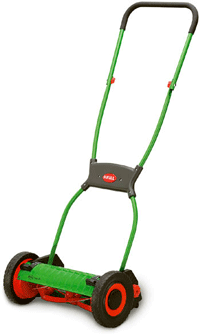
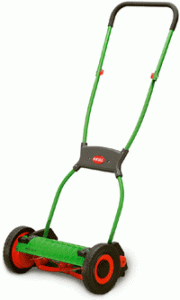 Mow lawns. For the next two or three months, you may have to mow grass weekly.
- It is impossible to overstate the importance of staying on top of the slug battle.
- Weed, Weed, Weed. Get them while they’re young and easy to pull. The ground is still damp, and the weeds come out much easier. Waiting will only allow them to mature and scatter more seed. Shot Weed will be rampant in most gardens now. Get it before it flowers and goes to seed. This will make you summer gardening chores much easier.
In May
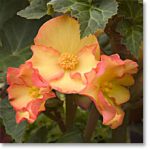 Set out annuals now. Plant these warm season plants after the danger of frost has passed.
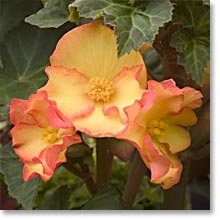
- You still have time to plant dahlias and can get your tuberous begonias in the ground. Begin a feeding program two weeks after you set them out.
- Herbs and vegetables can be put in when the soil warms. Basil, dill, fennel, rosemary, sage and thyme, beans, corn, eggplant, melons, okra, peppers, pumpkin, squash, and tomatoes can be planted now.
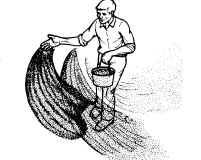
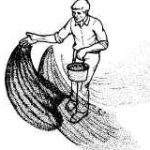 Fertilize as soon as annuals get established. Liquid foods like fish emulsion work well because the nutrients go directly to the roots. For perennials, use liquid or granular fertilizer. Shrubs will be happy with a granular fertilizer scattered around the base of each plant. For lawns, apply a high nitrogen fertilizer evenly over the grass to keep it growing thick and green. This will help crowd out any weeds. A healthy thick lawn is usually weed free.
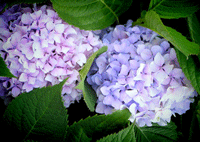
- Prune shrubs. Remove the old flowers from the hydrangeas if you haven’t done this yet. They bloom on last year’s wood growth so pruning them in the fall will cut off the flowers. Lilacs and rhodies can be cut back after blooming. Remove dead damaged or diseased branches and any that cross. Then prune for shape working from the bottom of the plant and from the inside out.
 Trim hedges. Shear or clip them between now and early June. Be sure to make the bottom wider that the top. Leaving the top wider is the cause of dead and dying leaves and branches near the bottom. The wider top shields the bottom from much needed light. A good rule of thumb is to shear coniferous hedges and clip broadleaf one.
- SLUGS, SLUGS, SLUGS! Your newly set out plants are fodder for those slimy creatures.

In June
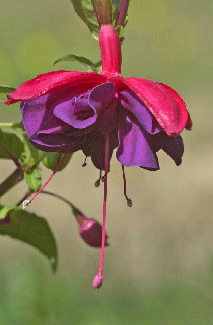
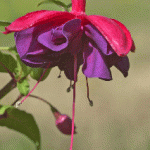 All annuals can be set out now. Set out newly purchased fuchsias as well as your young starts. Repot plants that have been held over winter. Pinch back growth to encourage bushier plants. The bushier the plant the more blooms.
- You still have a couple of weeks to get your dahlias and tuberous begonias out.
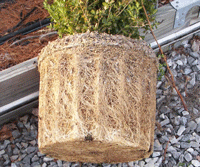
- Set out perennials. Soak them in a bucket for a while before planting if they are dry. Be sure to massage the root ball even to the point of cutting from the bottom and butterflying the ball. Many plants have become root bound. If the roots are growing in a circle, be sure to spread them out, cutting them if necessary.
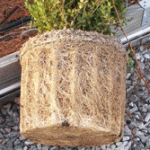 Failure to do this can result in a dead plant or one that thinks it is still in a pot and stops growing. A gentle massage of the roots will help the plant send them out into the garden soil. Don’t amend the planting hole. This will encourage the plant to keep its roots close and not send them out into the soil. Make the planting hole twice the size of the pot and the same depth. The plants should be planted at the same depth as in the pot. Water in well.
 - Keep up the war on slugs.
- Perennials can still be divided and replanted or shared.
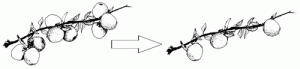
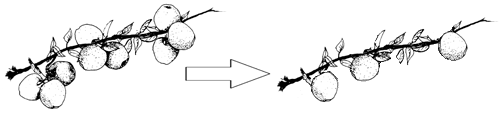
- Thin fruits. Once trees have dropped their immature fruit naturally, thin clusters so the remaining fruit develops to full size. On trees with heavy crops, thin doubles, and triples to one or two, respectively, then thin remaining fruit to 6-inch intervals along the branch. You’ll get fewer fruit but much larger ones and ease the strain on the branches.
- WEED AND FIGHT SLUGS! A little weeding every day or three times a week can keep a garden pretty much weed free. Just begin where you left off last time and work your way around the garden.
In July
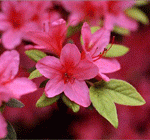 It’s not too late to plant annuals. Cut back those that are slowing down and you will see a new burst of flowers.
- Hardwood cutting of azaleas, fuchsias, hydrangeas, and wisteria can be taken this month. Take cuttings and place them in a sterile sandy potting mix.
- If you plant shrubs now, be sure to water it well for the next three months. Before planting soak the root ball overnight in a tub of water. If the plant is in a pot, make sure it is watered thoroughly before removing it from the pot. A dry plant may lose most of the dirt around its roots and it is way too late for bare root planting. Place water in the hole before planting and let it drain before setting the plant. Add half of the soil and water again to settle the soil and help remove air holes. Then fill the hole with soil and water again.
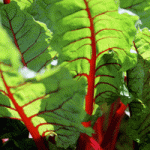 Sow second plantings of beets, carrots, and radishes, if you haven’t already. Plant broccoli, bush beans, chard, Chinese cabbage, kohlrabi, sugar pod or snow peas and turnips for fall harvest.
- For bigger mums, feed every three weeks. This will ensure more flowers, until buds start to show color. When the blooms open feed weekly. A good 5-10-10 liquid fertilizer is a good choice.
- Mulch to conserve soil moisture by spreading a three to four inch layer of organic mulch around the root zones of shrubs.
- Water perennials in the early morning hours before noon. This gives the plants time to dry out reducing the risk of powdery mildew and other fungi. Lawns can be watered in the evening.
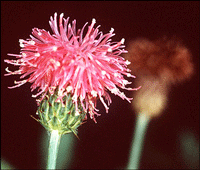
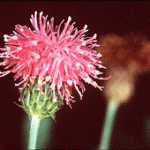 Be sure to remove thistles before they set seeds. Keep after all weeds.
- In our area, you still need to be aware of slugs. Unless we are having a hot dry spell they will be out and about in the cool damp evenings and early mornings.
In August
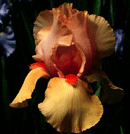 This is the month to dig and divide your astilbe and bearded iris. A sharp knife will do the trick. It’s easy to see the corms on your iris. Carefully cut them free of the clump making sure you have an eye on each one. When replanting be sure to have half the corm on top of the soil by making a small mound, placing the corm on top of the mound, and spreading the roots. Then cover the roots leaving the corm above ground. Plant where there is good drainage and lots of sun.
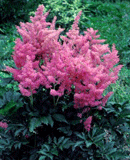 Astilbe can also be cut with a sharp knife. Large plants can be divided with a sharp shovel. Watch where the stems come up and cut between the sections. Replant in partial shade for best results. Mine get sun all morning and up till one or two o’clock in the afternoon. They seem quite happy. When you see directions to plant them in the shade it usually means in other than coastal climates. I have tried the shade and got spindly plants with few blooms. Others have had good luck with moderate shade. They seem to require protection from the hot afternoon sun.
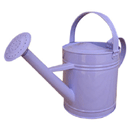 August is also a time to be sure that the plants get enough moisture. Most established perennials require only an inch of moisture a week. Annuals and garden veggies require more. A regular watering routine should be established early on. By letting the plants ‘tell’ you when they need water, you are stressing them. Check the soil for dryness by sticking your finger into it. If it is dry to the first knuckle, you need to water. Keeping a small inexpensive trowel near your garden plants is another easy way to test for soil moisture. Just turn the soil with the trowel to see how deep the moisture is.
- Keep up with winter annuals such as Shot Weed and Creeping Oxalis. The best way to get rid of these is to smother them with mulch.
In September
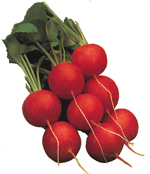
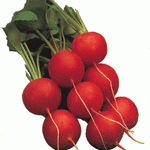 This is your last chance to sow cool season crops for fall and winter salad crops, including arugula, leaf lettuce, mustard greens, radishes, and spinach.
- Now into November is the best time to set out trees, shrubs, ground covers and many perennial plants. It is not a good idea to plant in heavy rains or when the ground is frozen.
- Start or over-seed lawns. A good perennial rye mixture for the Northwest is the best seed to use. Use a winterizing lawn food with a 21-5-5 mixture. This will give it the nourishment to withstand any type of weather. Never walk on the lawn when it is frozen.
- Bins of spring blooming bulbs begin to appear around Labor Day, such as anemones, crocus, daffodils, freesia, hyacinths, and tulips. Select plump and firm bulbs and plant them
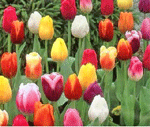 immediately. For the best show, try to pick bulbs that bloom at various times or plant them in two-week intervals. This will give you a continuous bloom for a longer period of time. Plant them in swaths of one-color melding into another color. Planting crocus bulbs in the lawn is fun. Your lawn becomes a colorful quilt and it’s a good excuse to put off that first mowing.
 - Now is the time to care for your roses. Allow a few flowers to fade on the plants and form hips late this month. This encourages the plants to head into dormancy. Hips are handsome in fall and winter, and many birds like to feed on them.
- Clean your greenhouses before cold weather arrives. Empty old soil from flats and seedbeds, hose down the greenhouse, replace broken glass and cracked weather-stripping and check heating and watering systems.
- Dig and divide perennials that have finished their bloom cycle. Use a sharp knife or spade to divide the clumps into quarters. Replant the divisions in weed free, well amended soil. Share with friends and neighbors the divisions you don’t have room for.
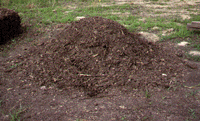
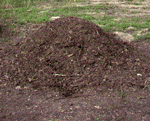 Make compost. Start a new pile or bin with grass clippings, spent annuals, prunings, and vegetable scraps. Keep piles well soaked but not soggy to speed up decomposition in hot weather. A mix of one part green (grass clippings, fresh cut annuals, kitchen scraps) to two parts brown (dead leaves, chopped twigs, shredded papers etc.) will keep your compost cooking.
- Weed around plants thoroughly. A 2″ layer of organic mulch will help keep the moisture in the soil during our usual Indian summer period. After the first hard frost a deeper layer can be added or the plants can be covered with evergreen boughs, pine straw, bark etc.
- Annuals can be coaxed into another round or two of blooms. Keep snipping off faded blossoms and feed plants with a liquid fertilizer. Those that are beyond help can be tossed in the compost unless they are diseased. In this case, they should be put in the trash.
In October
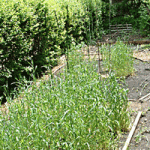 If you haven’t already done so, plant a cover crop in your vegetable garden. This not only keeps weeds down but when tilled into the soil adds much needed organic nutrients. Such crops as rye, legumes etc., will keep your vegetable garden soil nice.
- Stores and nurseries are now bursting with bulbs. Choose the plumpest, firmest bulbs and get them in the ground right away.
- October is still a good time to plant trees, shrubs, giving them a running start on the next summer season. Throughout the Northwest, this is the best perennial planting time. Plants put into the garden now will have the entire winter to adjust, and then shoot into action the instant weather warms in the spring. If the weather is hot and dry, water newly set out plants.
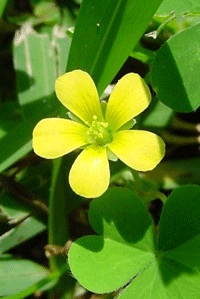
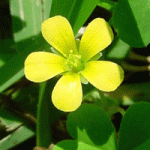 Continue to deadhead and feed one last time early in the month. If a frost hits, pull annuals and cut back frozen leaves and toss them on the compost pile. Never put anything diseased on the compost pile. It has to get very hot to kill fungi, and other diseases. Weeds such as Creeping Oxalis, Shot Weed, and those that spread by underground runners should be trashed, not put on the compost pile.
- Water until the rains begin, and water established plants deeply. Drought stressed plants are far more apt be damaged in a hard freeze. The myth of withholding water from plants in the fall is just a myth. The shorter days and cooler nights tell the plants to begin their preparations for winter’s dormancy period.
- Keep an eye out for pests such as rodents. As the weather cools, they look for warm spaces in which to winter. The places you store potatoes and winter squash are particularly attractive.
In November
- Spring flowering bulbs can still be set out until the rain stops you.
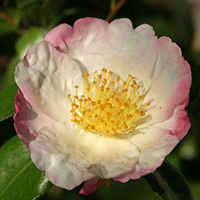
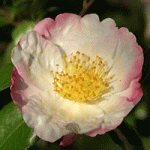 Sasanqua camellias are one of the joys of a coastal Northwest winter. Shop nurseries for plants in bloom. Before you plant it into the garden, slip it into a decorative pot for display on the porch or patio. These camellias are especially effective espaliered against a wall under a roof overhang where pelting winter rains won’t knock the blossoms apart.
- Place new evergreens in the garden. Set out single cloves of garlic for harvest next summer. Inchelium Red does especially well in the Northwest.
- Seeds for hardy annuals like larkspur, candytuft, clarkia and linaria and wildflower mixes can be sown this month. Be sure to read the package for the wildflower mixes. Some contain what are now listed as noxious weeds in our area.
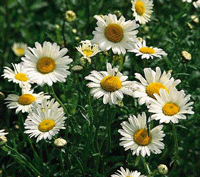
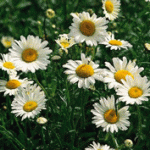 Cut back mums, asters, and any other perennials. Perennials that haven’t been divided should be done this month. Shasta daisies and siberian irises are a good example of perennials to divide in November.
- Groom borders. Late in the month cut back frost downed perennials and rake up leaves and debris. Then spread a four-inch layer of mulch around plants.
- Prune trees and shrubs unless they are frozen. Remove dead and damaged or diseased wood and any crossing branches.
- Tend lawns. Before winter sets in rake leaves, mow, and edge. There’s still time to over seed bare spots; rough up the soil, sow seed and cover with a thin layer of soil. Water until fall rains take over.
In December
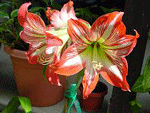 Garden shops and nurseries are now stocking amaryllis bulbs. Buy several bulbs and pot them up at two-week intervals. You’ll have blooms from mid-December to Valentine’s Day and beyond. Fun for those who like to garden inside as well as out.
- Ground layer evergreens such as hebe, daphne, mahonia, rhododendrons and hydrangeas. This is an easy way to propagate new plants. Find a branch near the ground and scrape a bit of the bark (about the size of a fingernail) from the underside. Dust the wound with rooting hormone (I’ve found this is not always necessary) and press the
 branch down into a shallow hollow in the ground. Cover the branch with a bit of soil and weight it down with a rock or a brick. Keep the area well-watered and by next fall the branch will have rooted. Cut the new plant away from the parent and plant it in another site or share with a friend.
 - Hardy trees and shrubs can go in the ground now.
- Give winter-blooming house plants an application of fertilizer but wait until April to feed others.
- Use greens from holiday swags and wreaths and branches from the Christmas tree to protect plants from the cold of winter.