Water Features

Water features have become increasingly popular in home gardens in the past several years. The soothing sound of falling water, the way that light plays upon the rippled surface of a pool, and the flashes of color from the fish below delight our senses. Gardens and water so often seem to perfectly complement each other.

A Word About Pond Safety

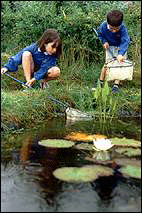
As it does for adults, water seems to holds a particular fascination for young children. Whenever there is open water there is also risk. Parents and garden owners should remember that a child’s natural curiosity will draw them towards a garden water feature, and they should remain vigilant so that an unfortunate accident does not occur.

Types of Water Features

Through the use of pumps, waterfalls, artificial streams, and level changes, diverse types of water features may be combined to create a complex, integrated garden design. Below are some of the common types of garden water features:

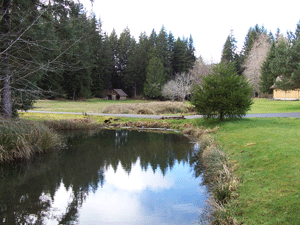
a rectangular unlined pond with trees in the backgroundThese are unlined natural or excavated ponds at ground level, usually fed by a stream or spring. They often have silt or sand bottoms, irregular edges, native vegetation, and occasionally contain fish.
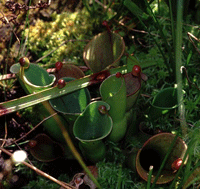
dense vegetation in a bog gardenThese gardens have saturated soil and lush, dense vegetation. They are created in naturally wet locations or with the use of waterproof liners under the soil. Usually there is little or no standing water, and no circulation or filtration systems are used.
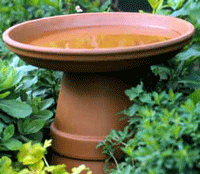
terra cotta bird bath in the gardenThese include traditional birdbaths and other structures designed to either collect rainwater or have water added as needed. Usually there are no circulation or filtration systems.

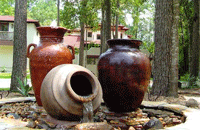
These water features do notwater feature with 3 large urns with water flowing from one on its side have a visible pool of water. The water passes into a below-grade collection point, where it is treated and recirculated.
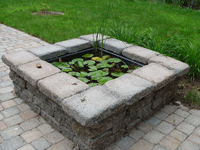
square pond made of concrete blocks sits on a brick patio and contains water lilies These ponds are raised above grade, and often contain both vegetation and fish. Rigid liners of various shapes are often used. The water is treated and recirculated.
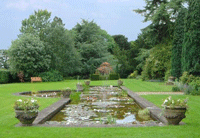
long narrow pond in grassy yard with trees in the backgroundThese are lined ponds or pools constructed at ground level. They may be lined with a variety of materials, be almost any shape or size, and often contain both vegetation and fish. The water is treated and recirculated.
Construction

Pond and pool support structures may be constructed with a variety of materials, including masonry, wood, and stone. The liners are usually either rigid plastic or a flexible membrane. You should follow the manufacturer’s installation instructions exactly, and follow local building codes when installing electrical equipment, plumbing, or filtration equipment.

Accessories

In addition to the basic pond installation, there are other accessories that you may wish to, or need to, install. Some of these may require permits or the assistance of a professional.

  • Protective barriers, covers, or fencing (for children and animals).
  • Water enhancements such as fountains, sprays, and waterfalls.
  • Paving and landscaping around the water feature.
  • A water circulation pump.
  • Provisions for aerating the water.
  • A filtration/purification system, especially if your water feature contains fish.
  • A temperature regulation system.
  • A drain system so maintenance may be easily performed.
  • Plumbing to ease filling your water feature.
  • Lighting to enhance its appearance.

Water Garden Plants

Visit your local garden pond shop, or thumb through pond publications, and you will see there are dozens of possible plants for your water garden. Carolyn Pauw Barden, WSU Master Gardener, reported success with these plants:

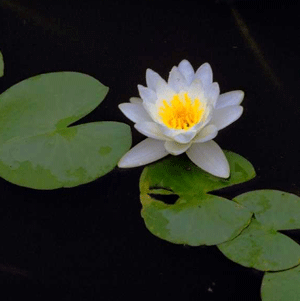
  • Water LilyHardy varieties of lily.
  • Papyrus.
  • Aquatic iris.
  • Houttuynia cordata “Chameleon”.
  • Lotus.
  • Marsh marigold (bog plantings).
  • Blue pickerel weed (bog plantings).

Maintenance

Garden water features require periodic maintenance to remain healthy and attractive additions to your garden. The amount and complexity of the maintenance depends on your installation. Below are some of the common maintenance activities associated with a garden water feature:

  • Pumps, aerators, and plumbing must be kept free of debris.
  • Filter and purifier elements need to be changed or cleaned.
  • Water changes may be needed to maintain water quality.
  • Organic material may need to be removed from the water surface or the sides and bottom of the pond.
  • Water levels must also be maintained.
  • Support structures for the pond must be kept in good repair.

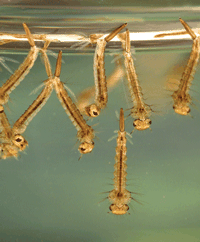
Another maintenance issue is preventing mosquitoes from breeding in your garden pond. The larvae of mosquitoes develop in calm water, and a still garden pond may be an optimal environment for them. Here are some steps you may take to prevent this:

  • mosquito larvae at the surface of waterKeep the water in your garden moving. Female mosquitoes will avoid laying eggs in moving water.
  • Get mosquito-eating fish for your pond. Some fish species, such as gambusia affinis, guppies, killifish, and small goldfish, are effective mosquito larvae predators. Make sure that these fish can not escape into our rivers or streams.
  • Add Bti to your pond. Bti is a naturally occurring type of bacillus that is eaten by the mosquito larvae, and rapidly kills them. It is not harmful to fish, pets, wildlife, or humans. It is sold under various trade names.
  • Encourage natural predators that consume mosquito larvae. These include frogs, toads, and dragonflies. Be cautious with pesticides!
  • If you have a rain collector like a birdbath, inspect and clean it regularly to keep it free of mosquito larvae.

A Final Caution

When selecting plants or fish for your water garden, make sure you are not purchasing or importing invasive species. A list of these may be obtained from:

The danger of species escape is greatest in water features that may flood and then drain into our streams or rivers.

Resources

Scroll to Top