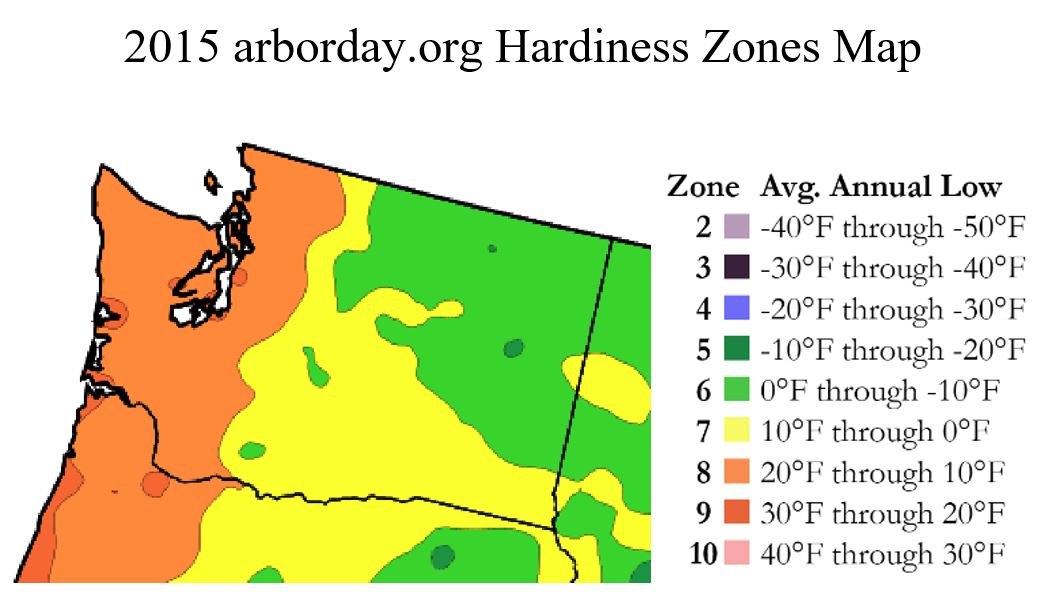
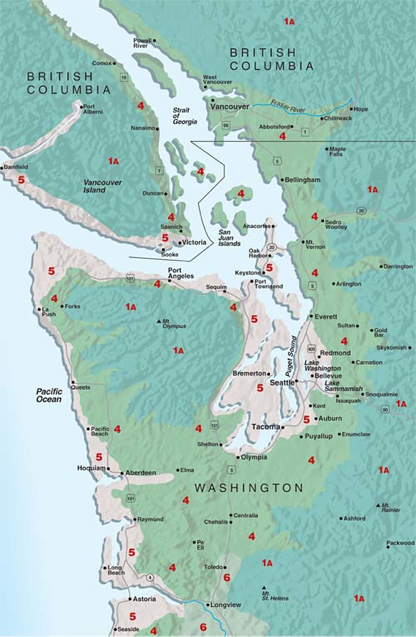
Zones in this edition of the USDA Plant Hardiness Zone Map (PHZM) are based on 1976–2005 weather data. A trial check did not find that the addition of more recent years of data made a significant difference in the definition of these zones. Each zone represents the mean extreme minimum temperature for an area, calculated from the lowest daily minimum temperature recorded for each of the years 1976–2005. This does not represent the coldest it has ever been or ever will be in an area, but it simply is the average of lowest winter temperatures for a given location for this time period.
Two new zones have been added to this edition of the USDA PHZM. Zones 12 and 13 have been introduced for regions with average annual extreme minimum temperatures above 50 degrees and 60 degrees F, respectively. They only appear on the maps for Hawaii and Puerto Rico.
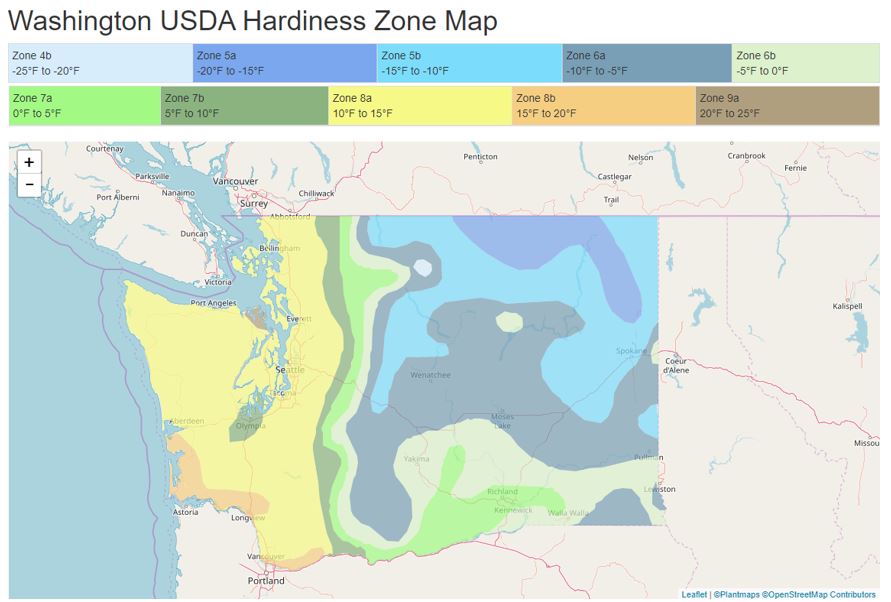
The majority of Grays Harbor and Pacific Counties, Washington, fall into USDA Plant Hardiness Zones 8a and 8b, which have an average annual minimum temperature range of 10 to 15 F and 15 to 20 F, respectively.
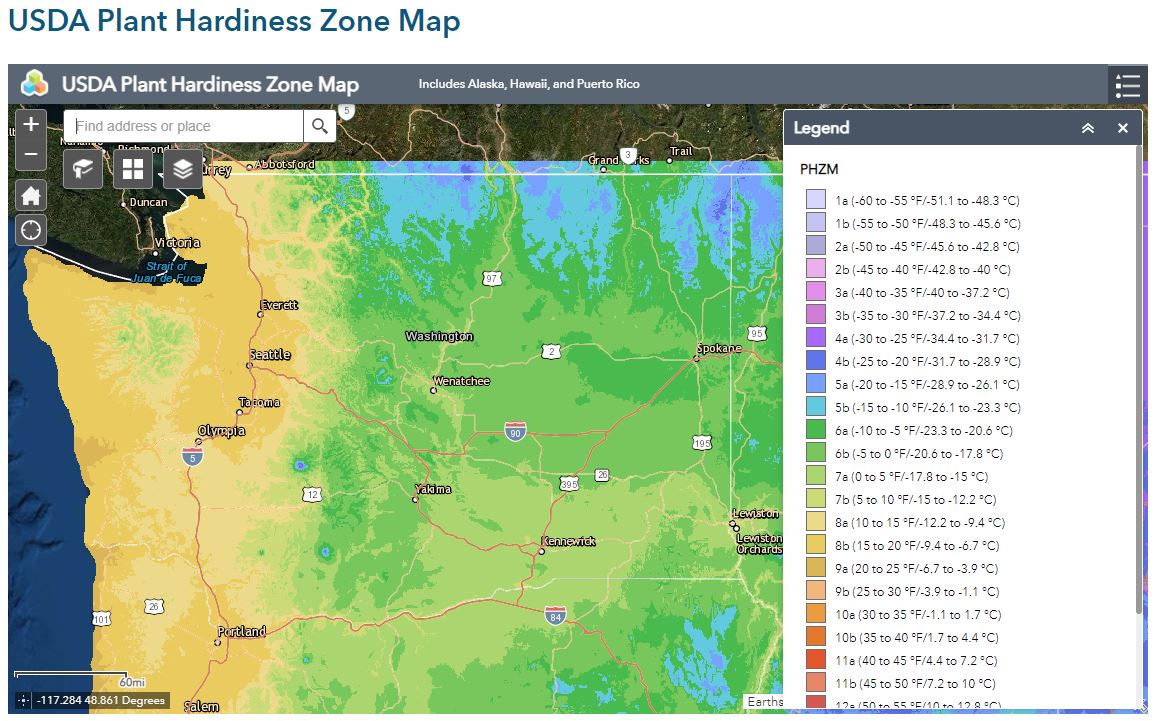
The concern with the USDA zones is that they are based only on average annual minimum temperatures, and do not take into consideration other factors which significantly impact horticulture, such as day-length, rainfall, frost, minimum and maximum temperatures, sunshine, and soils. The result is that large geographic areas of the US may be grouped together into a single USDA zone when, in fact, they actually have significantly different growing conditions. For example, while few would consider Aberdeen, Washington, and Dallas, Texas, as having similar climates and gardening conditions, both are in USDA Hardiness Zone 8a.
 .
.