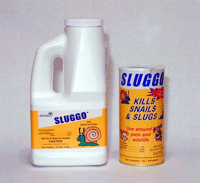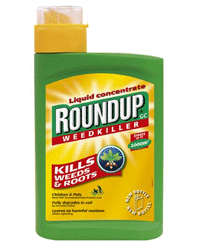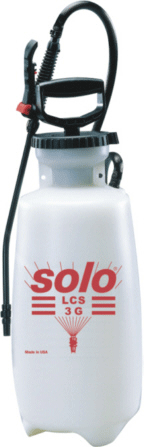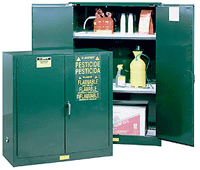
 A pesticide is any chemical substance that is designed to kill or control a pest. Many people think only of insecticides or herbicides when considering pesticides, but there are a full range of pesticides, each one designed to control a specific type of pest. Here are a few of the many types of pesticides:
| Pesticide Type | Pest Controlled | ||
| Insecticides | Insects | ||
| Miticides | Mites | ||
| Nematicides | Nematodes | ||
| Fungicides | Fungi | ||
| Bactericides | Bacteria | ||
| Herbicides | Weeds and other plants | ||
| Rodenticides | Rodents |
Surprisingly, some common household chemicals are also technically pesticides, for they are designed to kill or control pests: bug repellants, household disinfectants, and pool chemicals. All pesticides must be registered with the Federal EPA and Washington State before they may be sold or applied.
Pesticides are powerful chemicals which may have a significant impact on the environment, in either a positive or negative way.
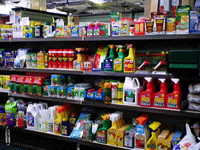 Some of the advantages of pesticides are that they are fast-acting, may be the only remedy that works against a specific pest, can control large infestations, easy to obtain and apply, may increase crop production by reducing crop losses, and their use against pests may significantly improve human health.
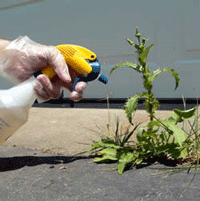 Herbicides are designed to kill weeds and undesirable plants. They are the most common type of pesticide used in the United States.
- Pre-emergent herbicides prevent seed germination.
- Post-emergent herbicides kill growing plants.
- Contact herbicides affect only the part of the plant it contacts.
- Systemic herbicides affect the entire plant.
- Selective herbicides kill only a specific type of plant.
- Non-specific herbicides kill all plants it comes into contact with.
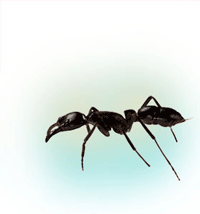 Insecticides are designed to kill insects. They are the second most common type of pesticide used in the United States.
- Systemic insecticides kill insects, which eat any part of the plant.
- Non-systemic only kill the insects that eat the treated part of the plant.
- Stomach insecticides must be ingested by the insect to kill.
- Contact insecticides will kill insects on contact, even if it is not consumed.
- Insecticides kill only insects, but not mites.
- Miticides kill only mites, not insects.
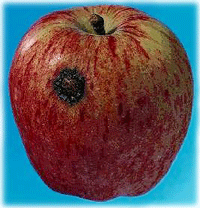 Fungicides are designed to kill fungi.
- Systemic fungicides are absorbed into and protect the entire plant.
- Contact fungicides must come into direct contact with the fungus to kill it.
- Protectant fungicides are applied to prevent an infection.
- Eradication fungicides are applied after an infection has taken place.
- Fungicides kill only fungi, but not bacteria.
- Bactericides kill only bacteria, not fungus.